What Employers Get Wrong About Disability Accommodations, and What It Costs Them
There is a conversation I have had more times than I can count.
An HR director calls me, sometimes a little embarrassed, and says something like this: "We have an employee who is blind, and honestly, we are not sure we are doing this right."
I always tell them the same thing. You are not alone, and you are not failing. Most organizations are operating with good intentions and almost no real training on what effective disability accommodation actually looks like.
Here is what that costs them.
The Hidden Cost of Guessing
When an employer does not know how to properly accommodate an employee who is blind or has low vision, the employee usually does not say so directly. They adapt. They compensate. They quietly work twice as hard to keep up with tasks that could be effortless with the right tools and training.
Eventually, one of two things happens. Either the employee burns out and leaves, taking their institutional knowledge with them, or they stay and disengage, doing the minimum required because nobody ever showed them what was actually possible.
Both outcomes cost the organization far more than a proper accommodation assessment would have cost upfront.
I have spent 31 years inside this exact problem. I have sat with employees who were given a piece of software nobody trained them to use, told to figure it out, and quietly written off as underperforming when the real issue was a twenty-minute training gap.
That is not a disability problem. That is a leadership problem.
What a Proper Accommodation Assessment Actually Looks Like
A real workplace accommodation assessment is not a checklist. It is not a single phone call where someone asks what software you need and orders it.
It starts with understanding the actual tasks the role requires, day to day, task by task. It includes a real conversation with the employee about what is working, what is not, and what they have already tried. It accounts for the specific assistive technology already built into most systems, much of which goes completely unused simply because nobody has shown anyone how to access it.
And it ends with a clear, actionable plan that the employer can implement immediately, along with the training needed to make it actually work in practice rather than just on paper.
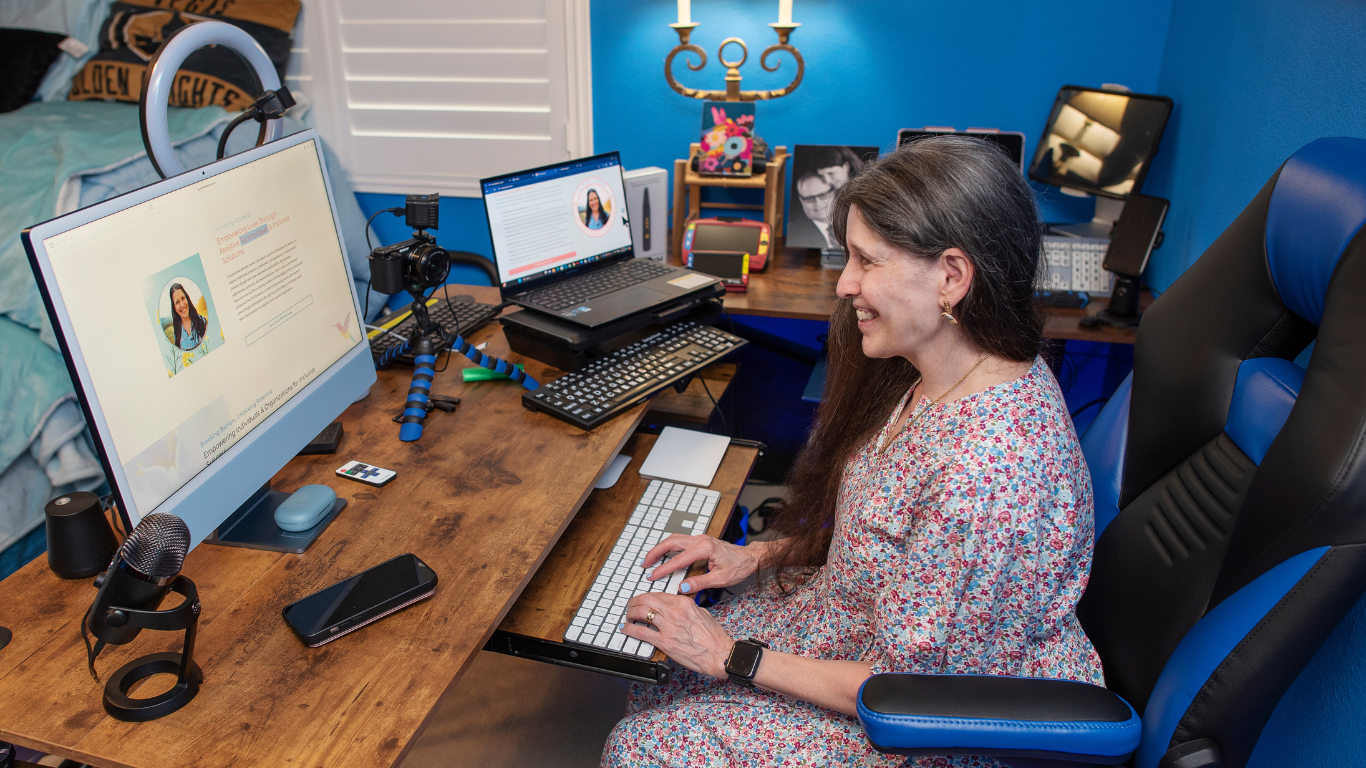
This is the work I do every day through Blessed Thru Blindness. I bring 55 years of lived experience with vision impairment combined with 31 years of professional expertise to organizations that want to get this right and simply have not had the right partner to help them do it.
The ROI Employers Do Not See Coming
Here is what consistently surprises HR leaders once they invest in doing this properly.
Retention improves, because employees who finally have the right tools stop quietly looking for an exit. Productivity improves, because tasks that used to take three times as long because of an unaddressed barrier now take the same amount of time as anyone else's. And perhaps most importantly, the rest of the team's understanding of what is possible expands in ways that change the entire culture.
Accessibility done well is not charity. It is not a compliance checkbox to file away and forget. It is a direct, measurable investment in the people who are already on your team, already doing the work, and already capable of doing it at full capacity if given the chance.
Where to Start
If you are an HR leader or executive reading this and recognizing your own organization in this conversation, you are exactly the person I want to talk to.
I offer Workplace Accommodation Assessments designed specifically to identify what your organization is missing and build a clear, practical path forward. This is not theoretical advice. It comes from three decades of solving exactly this problem for real people in real workplaces.
Remember to be grateful, and just as important, remember to be kind, because kindness is contagious. Stay blessed and empowered.
If your organization is ready to get this right, I would love to talk. Click the link below to book a Free 20-Minute Accommodation Readiness Call and let us talk about what a Workplace Accommodation Assessment could look like for your team.
https://www.victoriaessner.com/free20minsreadinesscall
Victoria Essner
Assistive Technology Coach, Job Accommodation Advisor, Advocate, Speaker, and International Best-Selling Author
Blessed Thru Blindness
