Why Most AI Training Fails Blind and Visually Impaired Individuals, and What Real Education Should Look Like
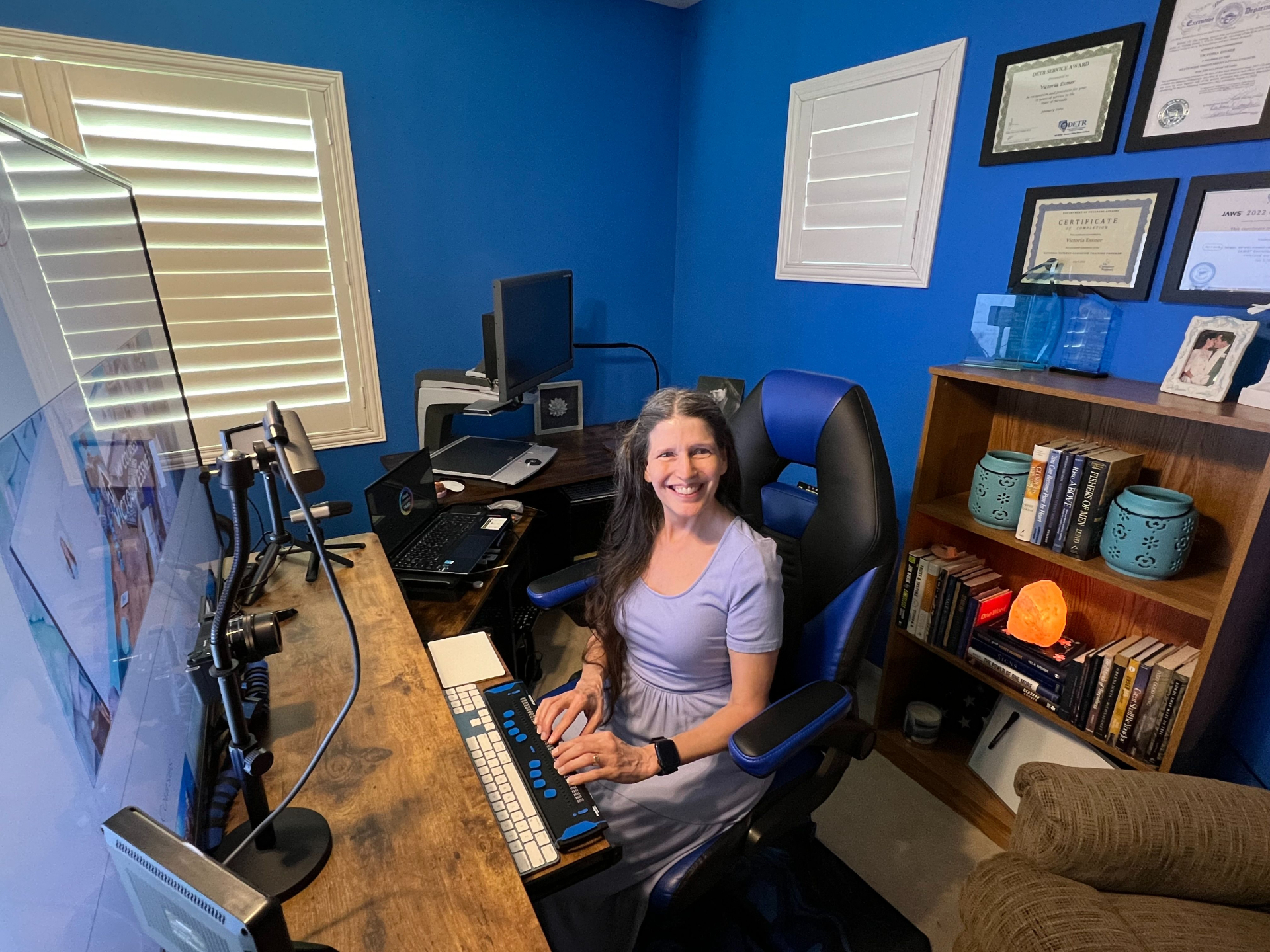
By Victoria Essner, Assistive Technology Coach, Job Accommodation Advisor, and International Best-Selling Author
The Problem Nobody Is Talking About
Artificial intelligence is everywhere right now. You cannot scroll through a newsfeed, listen to a podcast, or attend a professional event without hearing about it. The message is consistent and loud. AI will change everything. AI will save you time. AI will transform your business and your life.
And yet, if you are blind or visually impaired, you have likely sat through at least one AI tutorial, watched at least one demonstration, or attempted at least one online course, and walked away feeling more frustrated than when you started.
Not because you are not capable. Not because the technology is too complicated. But because nobody designed that training with you in mind.
That is the problem nobody in the AI education space is talking about. And it is time someone did.
What Most AI Training Gets Wrong
Most AI training available today makes several assumptions that immediately exclude blind and visually impaired learners.
It assumes you can see the screen being demonstrated. Instructors point, click, highlight, and gesture toward things on their display without describing what they are doing in audio. If you are using a screen reader, you are already lost before the first five minutes are over.
It assumes you have a sighted person nearby to help you set things up. The onboarding steps for most AI tools are presented visually with no accessible alternative offered. The message, whether intended or not, is that this technology was not built for you.
It assumes the examples used will resonate with your daily life. Most AI training uses examples centered around writing marketing copy, building business funnels, or creating social media content. Those are worthy goals. But they do not speak to the daily realities of a blind or visually impaired individual who simply wants to read an important letter independently, research a medical decision privately, or communicate with an employer without needing to ask someone else for help.
And perhaps most damaging of all, most AI training moves at a pace that leaves no room for the learning curve that comes with navigating a new tool through a screen reader. There is no pause. No accommodation. No acknowledgment that your experience of technology is different, and that different does not mean lesser.
What 55 Years of Lived Experience Taught Me
I have been navigating the world with vision impairment for 55 years. I have spent 31 years professionally supporting blind and visually impaired individuals as an Assistive Technology Coach and Job Accommodation Advisor. I have watched technology evolve from something that felt impossibly out of reach to something that, when taught correctly, can genuinely restore independence and dignity.
I have also watched the AI revolution unfold with a mixture of excitement and concern.
The excitement comes from what I know AI can do for our community. Claude, the AI tool I work with and teach, is patient in a way no human instructor can be every single time. It never sighs. It never rushes you. It never makes you feel like a burden for asking the same question twice. It works beautifully with screen readers. It responds to voice. It explains things in plain language when you ask it to. It will read an email from your doctor, summarize a government letter, help you draft a professional response, and research a major purchase, all without judgment and all on your own terms.
The concern comes from watching our community get left out of the conversation yet again. The people who need this technology most are the ones receiving the least amount of accessible, relevant, and respectful education about it.
That is not acceptable. And it is exactly why I am doing something about it.
What Real AI Education Should Look Like for Blind and Visually Impaired Individuals
Real AI education for our community starts with one foundational principle. The instructor must have lived experience or deep professional expertise with vision impairment. Not just a general understanding of accessibility. Actual knowledge of what it means to navigate the world without sight, to use a screen reader daily, to encounter barriers that sighted individuals never consider, and to find solutions that restore independence rather than increase dependency.
Beyond that, here is what accessible and effective AI education must include.
Every step must be described in full audio. No pointing. No visual-only demonstrations. Every action taken on screen must be narrated clearly so that a screen reader user can follow along without missing a single step.
The examples must reflect the real daily lives of blind and visually impaired individuals. Reading correspondence from professionals and government agencies. Researching purchases independently. Getting second opinions on medical and legal matters. Managing calendars and reminders without relying on a sighted Trusted Guide. Communicating confidently through emails, forms, and messages that have historically felt like barriers.
The pace must honor the learner. Screen reader users navigate technology differently. Real AI education acknowledges that and builds in time, patience, and a lifetime replay so that every student can revisit the material as many times as needed at their own pace.
The language must reflect dignity and empowerment. Not pity. Not inspiration for sighted audiences. Real, honest, practical education that treats blind and visually impaired individuals as exactly what they are. Capable, intelligent, determined people who simply need the right guide.
And finally, real AI education must welcome the full community. That means Trusted Guides, family members, support professionals, and rehabilitation counselors who want to understand these tools so they can better support the people they love and serve.
The Moment Everything Changed for Me
I want to share something personal with you.
There was a time, not long ago, when receiving an important piece of correspondence meant waiting. Waiting for someone to be available to read it to me. Waiting and wondering whether the information was being shared completely and accurately. Waiting and feeling, in that silence, that my independence had a ceiling I could not break through on my own.
That feeling is one I know intimately. And it is one I refused to accept as permanent.
When I discovered what AI could do, not the version being sold in expensive online courses designed for sighted business owners, but the real, practical, accessible version that works with a screen reader and responds to voice and never makes you feel like a burden, everything shifted.
I read my own correspondence. I researched my own decisions. I drafted my own responses. I did it independently, privately, and on my own terms.
That is what I want for every blind and visually impaired individual reading these words today.
What I Am Doing About It
On Wednesday, June 10, 2026, I am hosting the From Tech Frustration to Freedom AI Workshop. A live two-hour event designed specifically for blind and visually impaired individuals, their Trusted Guides, family members, and anyone who is tired of feeling left behind by artificial intelligence.
This is not a workshop about building complicated AI systems or automating your entire life. It is about using one tool, Claude, to do the things you are already trying to do, reading your correspondence, researching your decisions, communicating independently, and managing your daily life, better, faster, and on your own terms.
Every step will be described clearly in audio. The lifetime replay means you can pause, rewind, and practice at your own pace as many times as you need. Whether you navigate the world with a screen reader or with your eyes, you are welcome here and this workshop was built for you too.
The investment is $47, one time. No upsells. No add-ons. No surprises.
Because the blind and visually impaired community deserves better AI education. And I am here to provide it.
Reserve your seat at the From Tech Frustration to Freedom AI Workshop.
Wednesday, June 10, 2026. 11:30 AM to 1:30 PM Pacific Time. Live via Zoom with lifetime replay included. $47, one time.
Register here: https://www.victoriaessner.com/aiworkshopregistration
Victoria Essner is an Assistive Technology Coach, Job Accommodation Advisor, Advocate, Speaker, and International Best-Selling Author with 55 years of lived experience with vision impairment and 31 years of professional expertise. She is the author of From Tech Frustration to Freedom and delivered her TEDx Las Vegas talk of the same name in May 2026. Learn more at victoriaessner.com.
